
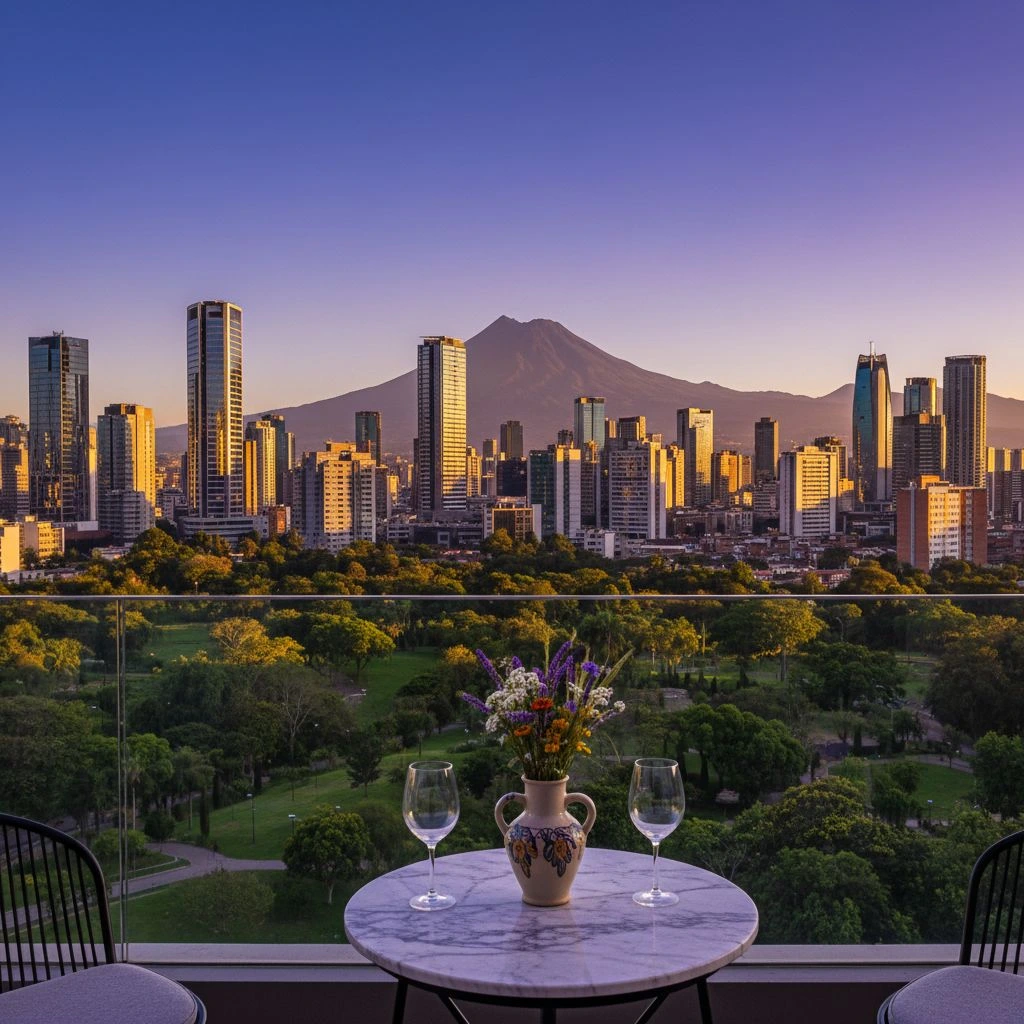
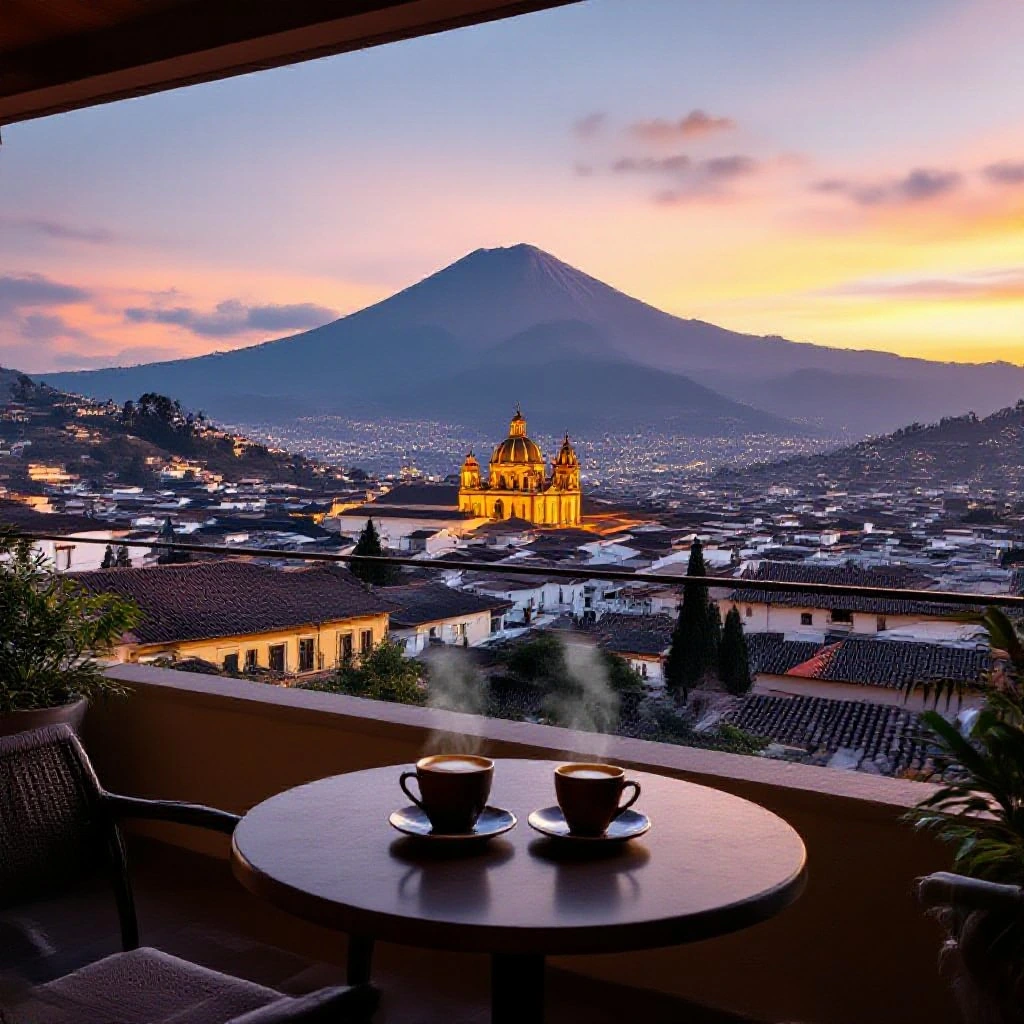
Most visitors arrive in Quito with a mental image built from photographs: colonial domes and bell towers, cobblestone streets winding through the UNESCO Historic Center, the looming silhouette of Pichincha Volcano above the rooftops. That image is accurate, and those things are worth every minute you spend with them. But Quito has another side that those photographs rarely show a network of urban parks and green spaces that are, for the people who actually live here, as central to the experience of the city as any church or museum.
La Carolina Park alone covers 64 hectares in the financial district. Parque Metropolitano stretches over 550 hectares of Andean forest above the city. Parque Itchimbía delivers the best panoramic views of the colonial skyline from a hilltop pavilion that once stood in Hamburg. These are not afterthoughts. They are genuine destinations places where the city breathes, where locals exercise and picnic and gather on weekends, and where a traveler who takes the time to slow down will discover a completely different and more authentic version of Quito than the one on the tourist trail.
This is the complete guide to the best parks in Quito: where they are, what to do in each one, the practical details you need to plan your visit, and why, if you’re staying in the northern part of the city, you’re already closer to most of them than you might realize.
Why Quito’s Parks Are Worth Your Time
At 9,350 feet above sea level, Quito’s altitude is one of the first things travelers feel when they step off the plane. The air is thinner, physical exertion feels different, and the temptation on the first day or two is to stay close to the hotel and take things easy. That’s reasonable advice. But once your body adjusts — usually by day two or three the city’s outdoor spaces become one of the most rewarding things you can access.
The altitude that initially slows you down is also the same altitude that makes Quito’s outdoor experience exceptional. The air is clean and cool, even in the middle of a major city. Morning light at this elevation has a particular quality — sharp, bright, with deep blue skies on clear days that makes parks, gardens, and viewpoints feel more vivid than they would at sea level.
Quito’s parks also reflect the city’s investment in public space over recent decades. La Carolina Park was redesigned in the early 2000s and has since become one of the most-used urban parks in South America. The Botanical Garden inside La Carolina was built to international standards and now houses one of the largest collections of native Ecuadorian orchids in the world. Parque Bicentenario, built on the site of the old international airport, is still being developed but already stretches for kilometers through the northern city.
Unlike many cities where public parks are largely ornamental, Quito’s parks are working urban infrastructure cycling paths, sports courts, lagoons, museums, food vendors, jogging tracks, playgrounds, and botanical collections. They are used every day by thousands of residents and they remain almost entirely free.
For travelers staying in the northern financial district around La Carolina, most of these parks are within a 5–20 minute Uber ride or, in the case of La Carolina itself, an easy walk from most hotels on Av. de los Shyris or Av. Amazonas.
One important note before you head out: if you’ve just arrived in Quito, give your body time to adjust before pushing the altitude too hard. Our altitude tips for Quito visitors has the practical guidance you need before your first morning jog or park walk.
La Carolina Park: The Heart of Modern Quito
If you understand La Carolina Park, you understand northern Quito. Everything in the financial district the hotels, the shopping centers, the restaurants, the office towers orbits around this 64-hectare green rectangle that sits between Av. de los Shyris to the east and Av. Amazonas to the west, stretching from Av. Naciones Unidas in the north to Av. Eloy Alfaro in the south.
On a weekday morning, La Carolina is runners and dog walkers and office workers cutting through on their way to work. On a Saturday or Sunday, it’s something else entirely: families spread across the grass, cyclists claiming the perimeter path, children queuing for paddleboats on the central lagoon, vendors selling roasted corn and tropical fruit from carts, fitness classes doing aerobics near the main entrance, and a general atmosphere of collective enjoyment that’s hard to put a number on but easy to feel the moment you walk in.
The park is flat and easy to navigate — a genuine rarity in a city built on hills and valleys. The main path around the perimeter is just under 4 kilometers, making it a practical jogging loop for hotel guests who want a morning run without navigating Quito’s steep terrain. A dedicated cycling lane runs the full perimeter, separate from pedestrian paths, and bike rentals are available near the main Av. de los Shyris entrance.
The Lagoon and Paddleboats
At the center of La Carolina Park sits a substantial artificial lagoon — large enough to feel like a genuine body of water, calm enough for a leisurely paddleboat ride with children or a companion. Paddleboat rentals are available daily and cost around $2–3 USD for 30 minutes. It’s one of those small, genuinely enjoyable experiences that parents traveling with kids shouldn’t overlook.
Sports Courts and Recreational Facilities
La Carolina has multiple full-size soccer fields, basketball courts, volleyball courts, and a dedicated skate park toward the northern end. On weekend mornings, most of these are in use from early morning. The park also has an outdoor fitness circuit with stations for bodyweight exercise scattered along one of the inner paths.
Food Vendors and Picnic Areas
The park’s main entrances — particularly on Av. de los Shyris have clusters of permanent and mobile vendors selling traditional Ecuadorian snacks: choclo (corn on the cob), chifles (plantain chips), helados de paila (hand-churned fruit ice cream), and fresh-cut fruit with lime and chili. Picking up food from these vendors and finding a spot on the grass is one of the most authentic local experiences available in the financial district.
Jardín Botánico de Quito: One of South America’s Best Botanical Collections
Inside La Carolina Park — accessible through a dedicated entrance off Av. Amazonas sits the Jardín Botánico de Quito, and it deserves more recognition than it typically receives from international visitors.
The garden covers approximately 4 hectares and houses over 2,400 plant species native to Ecuador. That number reflects the extraordinary biodiversity of a country that, despite its small size, contains more plant species per square kilometer than almost anywhere else on Earth. Ecuador has three distinct ecosystems within a few hours’ drive of Quito: the Andes highlands, the Amazon basin, and the Pacific coastal lowlands. The Botanical Garden attempts to represent all three.
The Orchid Collection
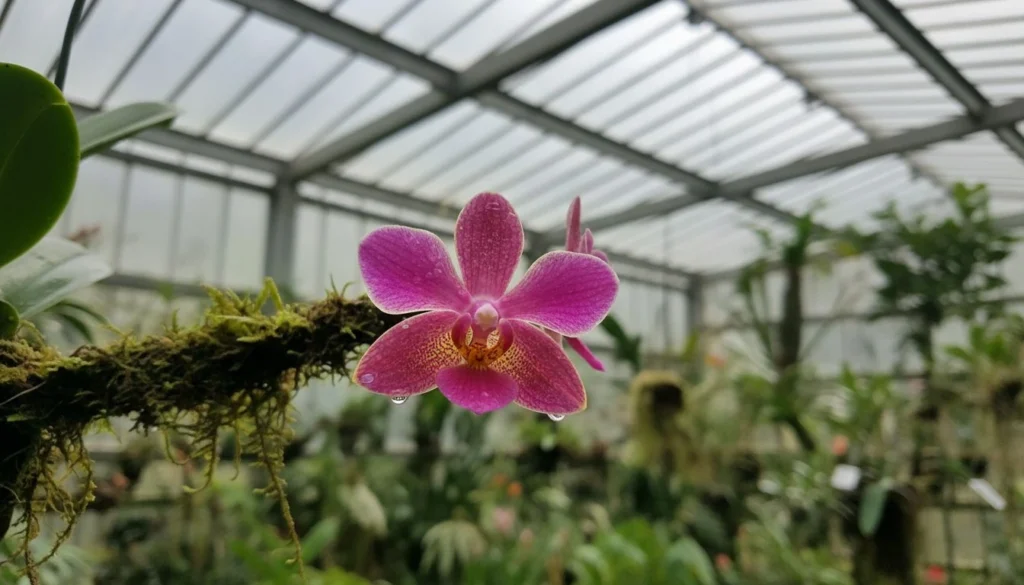
Ecuador has more than 4,000 native orchid species — the highest concentration of orchids of any country in the world, many of them found nowhere else. The Jardín Botánico’s orchid collection contains over 500 of these species, making it the largest display of native Ecuadorian orchids in existence. The orchid greenhouse is temperature-controlled and maintained to museum standards. Even visitors with no particular interest in botany tend to stop and stare.
The Butterfly Dome
A dedicated butterfly house within the garden contains dozens of live butterfly species in a walk-through enclosure. Tropical butterflies land on visitors freely — it’s an experience that children universally love and that surprises most adults with how affecting it is to have a large morpho butterfly settle on your arm.
Additional Collections
Beyond orchids and butterflies, the garden has dedicated sections for bromeliads (Ecuador has over 600 native species), cacti and succulents from Andean ecosystems, medicinal plants used in traditional Ecuadorian medicine, and a cloud forest section that recreates the atmospheric, moss-covered vegetation found at elevations above Quito.
Practical information:
- Location: Inside La Carolina Park, entrance on Av. Amazonas N54-74
- Hours: Tuesday–Sunday, 9:00 AM – 5:00 PM (last entry 4:30 PM)
- Admission: Adults approximately $3.50 USD / Children (under 12) approximately $2 USD
- Duration: Allow 1–2 hours for a full visit
Museo de Ciencias Naturales: Natural History Inside the Park
On the southern edge of La Carolina Park, the Museo de Ciencias Naturales (Museum of Natural Sciences) operates under the management of Casa de la Cultura Ecuatoriana. It’s one of the better natural history museums in the country and a practical option for families looking for a structured, educational activity within the park.
The museum’s collections focus on Ecuadorian biodiversity: birds — Ecuador has more bird species per square kilometer than any other country on Earth, including over 1,600 documented species — mammals, reptiles, amphibians, insects, and marine life. Many specimens are endemic species found only in Ecuador or the Galápagos Islands.
Taxidermy displays are the primary format, which some visitors find dated compared to more modern natural history museums. That said, the scale and diversity of what’s on display is impressive, and for travelers who won’t make it to the Amazon or the Galápagos on a given trip, the museum provides a genuine sense of Ecuador’s biological wealth.
Practical information:
- Location: Inside La Carolina Park, Rumipamba s/n at Av. de los Shyris
- Hours: Monday–Friday, 9:00 AM – 4:30 PM
- Admission: Approximately $2 USD
Parque El Ejido: Art, Culture, and Open-Air Markets
About 15 minutes south of La Carolina by Uber, where the modern northern city meets the edge of the Historic Center, you’ll find Parque El Ejido one of Quito’s oldest public parks and one of its most culturally interesting.
During the week, El Ejido is a gentle, tree-shaded urban park where office workers eat lunch and students from the nearby universities cross on foot. But on Saturday and Sunday mornings, it undergoes a weekly transformation that makes it one of the most interesting cultural destinations in the city.
The Open-Air Art Market
Every Saturday and Sunday, from approximately 9:00 AM to 4:00 PM, local Ecuadorian artists set up stalls along the northern edge of the park — the stretch facing Av. Patria — displaying and selling original paintings, sculptures, ceramics, and crafts. This is not a tourist trinket market. The works on display range from traditional Andean landscapes painted in oil to contemporary abstract work to indigenous-influenced textile art, and the artists themselves are generally present, willing to discuss their work, and open to negotiation on price.
Buying art directly from Ecuadorian artists is one of the most meaningful souvenirs you can take home from Quito, and the prices at this market are far more reasonable than anything you’d find in a gallery. A well-executed oil painting of the Andes can often be purchased for $30–$80 USD directly from the artist who painted it.
Casa de la Cultura Ecuatoriana
Directly bordering Parque El Ejido on its northern edge sits the Casa de la Cultura Ecuatoriana, the country’s primary institution for cultural arts. Its neoclassical circular building houses a theater, multiple exhibition galleries, a cinema, and one of Ecuador’s better libraries. The institution regularly hosts free or low-cost public concerts, film screenings, photography exhibitions, and performing arts events — check their schedule during your visit for anything running concurrently.
Practical information:
- Location: Av. Patria between Av. 10 de Agosto and Av. 6 de Diciembre
- Art market hours: Saturday–Sunday, ~9:00 AM – 4:00 PM
- Park hours: Always open, free entry
- Getting there: ~15 minutes by Uber from La Carolina ($2–3 USD)
Parque Metropolitano Guangüiltagua: Quito’s Forest in the City
If La Carolina is Quito’s recreational park and El Ejido is its cultural park, then Parque Metropolitano Guangüiltagua is its wilderness a 550-hectare expanse of Andean forest that sits on a ridge above the city’s eastern edge, accessible and yet genuinely removed from urban life in ways that larger, more famous parks in other cities rarely manage.
Getting to Parque Metropolitano takes about 20 minutes by Uber from the financial district. The most common entry point is through the Bellavista sector, accessed via Av. Simón Bolívar. From the moment you pass through the entrance, the contrast with downtown Quito is total: eucalyptus trees — many of them decades old and towering — line the paths, bird calls replace traffic noise, and the temperature drops by several degrees as you move into the shade of the forest.
Hiking Trails
The park has a well-maintained network of signed hiking trails ranging from wide, flat paths accessible to all fitness levels to steeper, more demanding routes that climb to the ridgeline and offer views back down over the city. Trail maps are available at the main entrance, and the difficulty of each route is clearly marked.
The main loop through the lower section of the park takes approximately 45 minutes to 1 hour at a comfortable pace. The longer routes that climb to the upper lookout points take 2–3 hours and reward the effort with panoramic views of Quito spread out in the valley below, with Cotopaxi Volcano visible on clear days to the south.
Birdwatching
Ecuador’s extraordinary avian diversity extends to the urban edges of Quito, and Parque Metropolitano is one of the best easily accessible birdwatching spots in the city. Over 50 bird species have been recorded within the park, including multiple species of hummingbird (Ecuador has more than 130 native hummingbird species), tanagers, hawks, and various Andean flycatchers. Early morning visits — arriving at the park’s 6:00 AM opening — offer the best birdwatching windows.
Mountain Biking
The park has designated mountain biking trails separate from the hiking paths. Riders familiar with the trails report that the technical difficulty is moderate, with good variety in terrain. Bikes are not available for rent within the park, so you’ll need to arrange your own or join an organized cycling tour that includes equipment — several operators in the La Carolina area offer guided rides in the park.
Viewpoints
Several formal miradores (viewpoints) are positioned throughout the upper sections of the park, each offering different perspectives on the city and the surrounding Andean landscape. The best of these — accessible via the longer hiking routes — provide clear sightlines south to Cotopaxi on days with good visibility. On the days when this view comes together, with a snow-capped active volcano floating above a band of cloud in the distance, it’s one of the most memorable things you can see from any city in the world.
Practical information:
- Location: Eastern Quito, above the González Suárez and La Floresta neighborhoods
- Entrance: Via Av. Simón Bolívar (Bellavista sector) or through Cumbayá
- Hours: Daily, 6:00 AM – 6:00 PM
- Admission: Free
- Getting there: ~20 minutes by Uber from La Carolina ($3–5 USD)
- What to bring: Layers (the forest is cooler than the city), water, sunscreen, comfortable hiking shoes
Parque Itchimbía: The Best View of Quito’s Skyline
There’s a hill between the Historic Center and the La Floresta neighborhood that most tourists never climb, and that is a genuine shame. Parque Itchimbía sits on top of that hill, centered on a remarkable glass-and-iron pavilion that looks like a piece of Victorian engineering dropped into the Andes — because that’s essentially what it is.
The Palacio de Cristal (Crystal Palace) was originally constructed in Hamburg in the late 19th century, shipped to Ecuador, and erected in Quito as a market building. After decades of various uses, it was painstakingly restored and relocated to its current hilltop position in the early 2000s, where it now serves as an event space and occasional exhibition venue. The structure is extraordinary up close — exposed iron framing, glass walls, ornate Victorian detailing — and it reads beautifully against the backdrop of Quito’s colonial skyline and the mountains beyond.
The Views
The views from Itchimbía are the main reason to come, and they justify the climb. From the park’s upper terraces, you look directly down over the roofscape of the Historic Center — domes, bell towers, the Gothic spires of the Basílica del Voto Nacional, the dense colonial fabric of La Ronda and Calle Morales. To the west, Pichincha Volcano fills the horizon. To the north, the modern towers of La Carolina and the financial district.
At sunset particularly in the dry season when the light is clear and warm — the colonial skyline turns gold and the mountains go deep purple. This is arguably the most photographically rewarding time to visit Itchimbía, and it draws a modest crowd of locals and photographers who know about it. Get there 30–40 minutes before sunset and find your spot on the upper terrace.
Walking Paths and Outdoor Amphitheater
The park has a paved walking loop around its main plateau, with benches and viewpoints at intervals. An outdoor amphitheater in the lower section occasionally hosts free public concerts and cultural events — check local listings during your visit. The area around the Palacio de Cristal has shaded seating, and the atmosphere on a weekend afternoon is relaxed and locals-only in a way that the nearby Historic Center rarely manages.
Practical information:
- Location: Calle Antepara, bordering the La Floresta neighborhood
- Hours: Always open, free entry (Palacio de Cristal has its own hours for events)
- Best time to visit: Morning for clear views, late afternoon/sunset for photography
- Getting there: ~10–15 minutes by Uber from La Carolina ($2–4 USD)
- Combine with: A walk through La Floresta’s independent cafés and restaurants after your visit
Parque Bicentenario: Quito’s Most Ambitious Urban Renewal
In 2013, Quito’s old Mariscal Sucre International Airport — which had operated in the middle of the city for decades — closed and relocated to a new facility 18 miles east of downtown. What it left behind was a 3.5-kilometer runway, multiple terminal buildings, hangars, and support facilities sitting in the middle of one of the fastest-developing urban corridors in Ecuador.
The decision of what to do with this space became one of the most consequential urban planning choices in Quito’s recent history. The answer was Parque Bicentenario: a 121-hectare linear park stretching north through the Iñaquito and Ponceano neighborhoods, converted from aircraft infrastructure into public green space, sports facilities, cycling paths, and community areas.
The park is still developing — construction of various sections continues as of the mid-2020s — but what exists is already impressive in scale. The central linear path runs for over 3 kilometers and is wide enough for cyclists, joggers, and pedestrians to coexist comfortably. A dedicated cycling lane runs the full length. There’s a skate park, multiple outdoor fitness stations, football pitches, and extensive open grass areas.
What makes Bicentenario interesting beyond its scale is its atmosphere. Because it’s relatively new and located away from the traditional tourist zones, the park is used almost exclusively by Quiteños — families from the surrounding neighborhoods, athletes using the sports facilities, cyclists who do the full length as a training loop. It’s one of the most genuinely local outdoor experiences available in the northern city.
Practical information:
- Location: Iñaquito and Ponceano neighborhoods, northern Quito, near Av. de la Prensa
- Hours: Open daily, best during daylight
- Admission: Free
- Best on: Weekend mornings for maximum activity
- Getting there: ~15–20 minutes by Uber from La Carolina ($3–5 USD)
Parque Urbano Cumandá: Culture Under the Highway
Not every park on this list is a green space in the conventional sense. Cumandá Urban Park, located in the Chimbacalle neighborhood near the Historic Center, is built beneath and around a highway interchange — reclaimed urban infrastructure converted into a community center with a park at its core.
The project began in the early 2010s as a response to the deteriorating conditions of the Chimbacalle neighborhood, which had suffered from urban decline as the city’s center of gravity moved north. What was essentially dead space under a highway became, over several years of design and construction, one of the most interesting community spaces in the city: a skate park, a climbing wall, an outdoor gym, a swimming pool, a library, event spaces, and a cafe, all connected by ramps and paths under the concrete structure above.
Cumandá is not a scenic park in the way that Itchimbía or Metropolitano are scenic. There are no mountain views or forest trails. What it offers instead is something rarer in tourist Quito: a functioning community space where local culture — skateboarding, street art, informal sports, youth programming, neighborhood events — plays out in real time. For travelers interested in contemporary urban life rather than postcard landscapes, it’s one of the most honest and interesting places you can visit in the city.
Practical information:
- Location: Av. Maldonado at 24 de Mayo, Chimbacalle neighborhood
- Hours: Generally daily, some facilities have specific hours
- Admission: Free (some facilities have small fees)
- Getting there: ~20 minutes by Uber from La Carolina ($3–5 USD) or walk from the Historic Center
Practical Tips for Visiting Quito’s Parks
Go in the morning
Quito’s weather pattern — clear mornings, afternoon clouds and occasional showers — means that the ideal window for outdoor activities is between 7:00 AM and 11:00 AM. Parks are at their most pleasant, light is at its best for photography, temperatures are comfortable, and the city is active without being crowded. By mid-afternoon, you may encounter a shower that disrupts plans, especially in the rainy season.
Dress in layers
The altitude means that temperatures can feel very different in sun versus shade, and can drop quickly when clouds move in. A light fleece or jacket rolled into your bag is worth the space. Even on the hottest day in Quito, you’ll want it within an hour if the sun goes behind a cloud.
Sunscreen is non-negotiable
The equatorial sun at 9,350 feet is significantly more intense than it feels. UV radiation at altitude is substantially higher than at sea level, and cloud cover provides less protection than most people expect. Wear SPF 50+ and reapply this is one of the things visitors to Quito most commonly regret not doing.
Use Uber
Quito’s Uber service is reliable, inexpensive, and by far the safest way for visitors to get between parks. A typical journey from La Carolina to any park on this list costs $2–5 USD and takes under 20 minutes. Public buses are also cheap ($0.25 per ride) and can reach most parks, but routes require some advance research.
Watch your belongings
Quito’s parks are safe during daylight hours, but they are public spaces in a capital city and standard urban precautions apply. Don’t leave bags unattended, don’t display expensive equipment unnecessarily, and be more aware of your surroundings in the less-visited sections of larger parks like Metropolitano. Most park visits are entirely uneventful — this is standard big-city common sense rather than a specific warning.
Check the season before planning outdoor activities
If your visit includes hiking in Parque Metropolitano, viewpoint photography at Itchimbía, or a morning run at La Carolina, the dry season (June–September) will give you the most reliable conditions. For more detail, our guide to the best time to visit Quito breaks down exactly what to expect in each month.
Where to Stay if Parks Matter to You
If you’re visiting Quito specifically to make use of the parks — for morning runs, cycling, outdoor activities, or just the quality of life that comes from being close to green space — your choice of neighborhood matters more than most travelers realize.
The Historic Center is beautiful and culturally rich, but it’s built on steep hillside terrain, its streets are cobblestone rather than park-path smooth, and the nearest significant park (Itchimbía) requires a climb. It’s not a practical base for runners or families who want easy outdoor access.
The La Carolina neighborhood — the financial and commercial district in northern Quito — is a fundamentally different proposition. The area is flat, modern, and oriented around the grid of streets that surrounds La Carolina Park. For most hotels in this area, including those on Av. de los Shyris and Av. Amazonas, La Carolina Park is within a 5-minute walk. The Botanical Garden and Natural Sciences Museum are inside the park itself. Parque Bicentenario is 15 minutes north. Parque El Ejido and the Itchimbía viewpoint are 10–15 minutes by Uber to the south.
From a parks-and-outdoors perspective, La Carolina is simply the best place in Quito to be based. If you want to explore your options for staying in a hotel steps from La Carolina Park, Hotel Finlandia is located directly in the financial district, within the park’s immediate orbit.
For a broader comparison of all of Quito’s neighborhoods including the Historic Center, La Mariscal, La Floresta, and La Carolina our guide to the best area to stay in Quito covers the tradeoffs in detail.
If you’d like to plan your outdoor activities before you arrive, or if you need help with logistics around day trips that extend beyond Quito’s parks, contact Hotel Finlandia our front desk team has practical local knowledge about conditions, timing, and how to get the most out of Quito’s outdoor spaces in any season.
Combining Parks with Quito’s Other Attractions
Quito’s parks work best when combined with the broader rhythm of the city rather than visited in isolation. Here are a few itinerary combinations that experienced Quito visitors find particularly satisfying:
Morning in La Carolina → Afternoon in the Historic Center: Start with a jog or walk at La Carolina, visit the Botanical Garden, then take an Uber to the Historic Center for the afternoon. Spend 2–3 hours exploring the Plaza Grande, La Compañía de Jesús church, and the Basílica. Return to La Carolina for dinner at any of the restaurants along Av. de los Shyris.
Saturday morning at El Ejido art market → lunch in La Floresta: Take an Uber to Parque El Ejido by 9:30 AM, browse the artists’ market, then walk 15 minutes north to La Floresta for lunch at one of the neighborhood’s independent restaurants. One of the best Saturdays you can have in Quito.
Sunset at Itchimbía → dinner in the Historic Center: Uber to Itchimbía at around 5:00 PM, spend an hour at the viewpoint as the light changes over the colonial skyline, then walk down into the Historic Center for dinner at La Ronda, the pedestrianized street known for its traditional restaurants and live music.
Full day at Metropolitano: Take an early Uber to Parque Metropolitano (arrive by 7:00 AM for the best birdwatching), hike the longer upper trails to the viewpoints, return to the hotel by midday before the afternoon cloud cover typically sets in. Pair this with a rest afternoon and dinner locally.
Quito’s Parks: The Practical Summary
| Park | Size | Best For | Distance from La Carolina | Admission |
|---|---|---|---|---|
| La Carolina Park | 64 ha | Running, cycling, families, lagoon | Walking distance | Free |
| Jardín Botánico | 4 ha (inside La Carolina) | Orchids, butterflies, botany lovers | Walking distance (inside park) | ~$3.50 adults |
| Parque El Ejido | Urban park | Art market, culture, weekend mornings | ~15 min Uber | Free |
| Parque Metropolitano | 550+ ha | Hiking, birdwatching, forest walks | ~20 min Uber | Free |
| Parque Itchimbía | Hill park | Best city viewpoints, sunset photography | ~15 min Uber | Free |
| Parque Bicentenario | 121 ha | Cycling, local atmosphere, sports | ~15 min Uber | Free |
| Parque Cumandá | Urban renewal | Skateboarding, climbing, local culture | ~20 min Uber | Free (mostly) |
Final Thoughts: Why Quito’s Parks Are Worth Your Time
The travelers who come back from Quito talking about more than churches and markets are usually the ones who made time for the parks. Not because the churches aren’t extraordinary they are but because the parks are where you encounter the city as a living thing rather than a historic artifact. La Carolina on a Sunday morning, the orchid greenhouse of the Botanical Garden, the hilltop silence of Itchimbía at sunset, the eucalyptus forest of Metropolitano with its bird calls and filtered light — these are experiences that don’t appear on most itineraries and that almost no one regrets making time for.
Quito is a city that rewards curiosity. The tourists who follow the standard trail see a great deal. The travelers who go a little further — who take the Uber to Itchimbía, who get to El Ejido by 9:00 AM on a Saturday, who do the longer hiking route in Metropolitano see something closer to the real city.
Go to the parks. Take the time. Bring sunscreen and a jacket. It’s worth every minute.