
Traditional Ecuadorian Dishes You Should Try in Quito
Quito’s food scene reflects the country’s Andean geography, with hearty soups and corn-based dishes that make sense at this altitude. For where to actually eat these dishes, our restaurants in Quito guide lists specific spots, and if your trip falls around a holiday, our guide to guaguas de pan and colada morada covers a specific seasonal tradition worth knowing about. For coffee and lighter bites between meals, check our best cafes in Quito guide.
What ecuadorian food quito is known for
Andean cuisine in Quito leans heavily on potatoes, corn, and pork, reflecting the region’s agricultural traditions and higher-altitude climate compared to Ecuador’s coast. Meals also tend to be substantial, built around the idea of fueling a full day rather than light, quick bites.
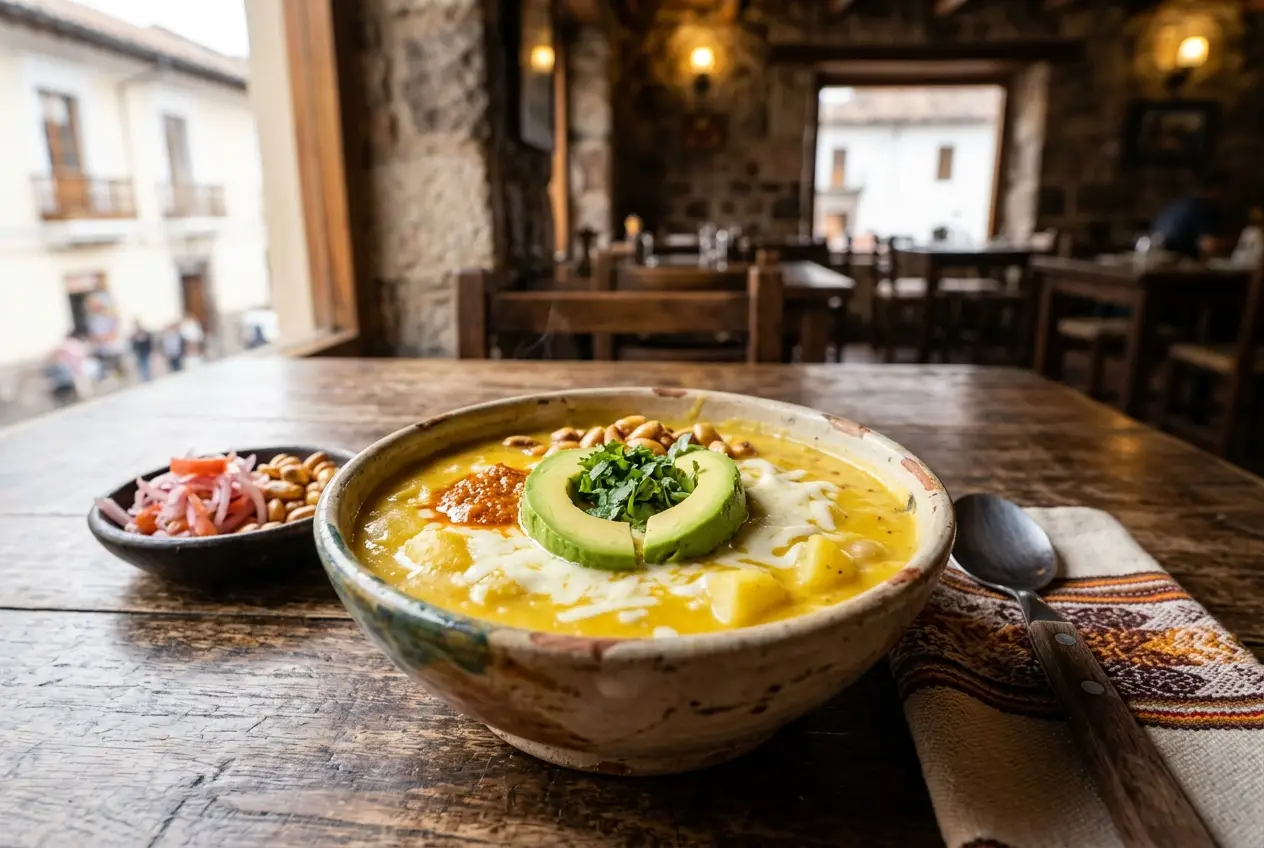
Locro de papa
This potato soup, typically finished with cheese and avocado, is one of the most common comfort foods in the city and a good introduction to Andean flavors for first-time visitors. It’s widely available and rarely spicy, making it an easy dish to start with.
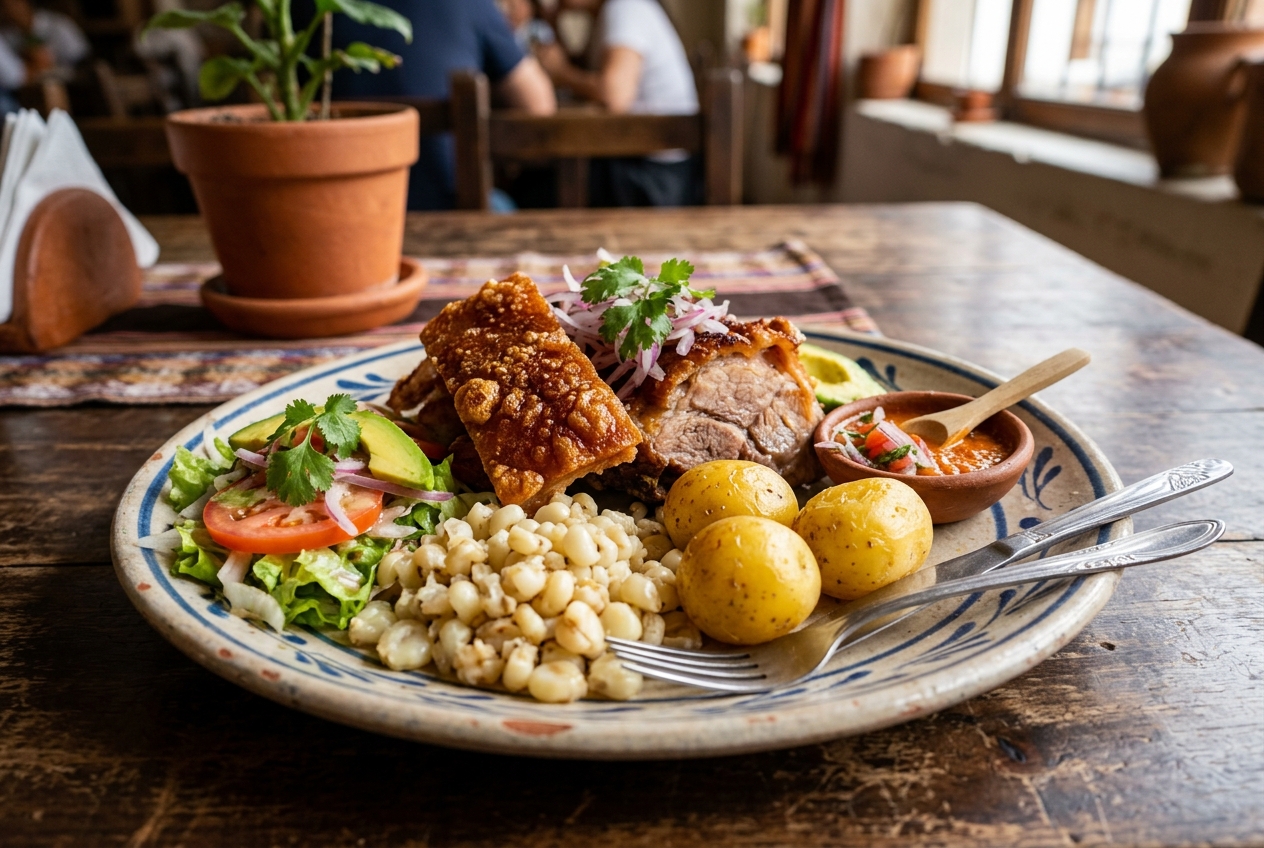
Hornado
Roasted pork, often slow-cooked and served with mote (hominy corn) and llapingachos (potato patties), is a weekend staple found at markets and traditional restaurants throughout the city. Look for it at local markets on Saturdays and Sundays, when it’s often prepared fresh in large batches.
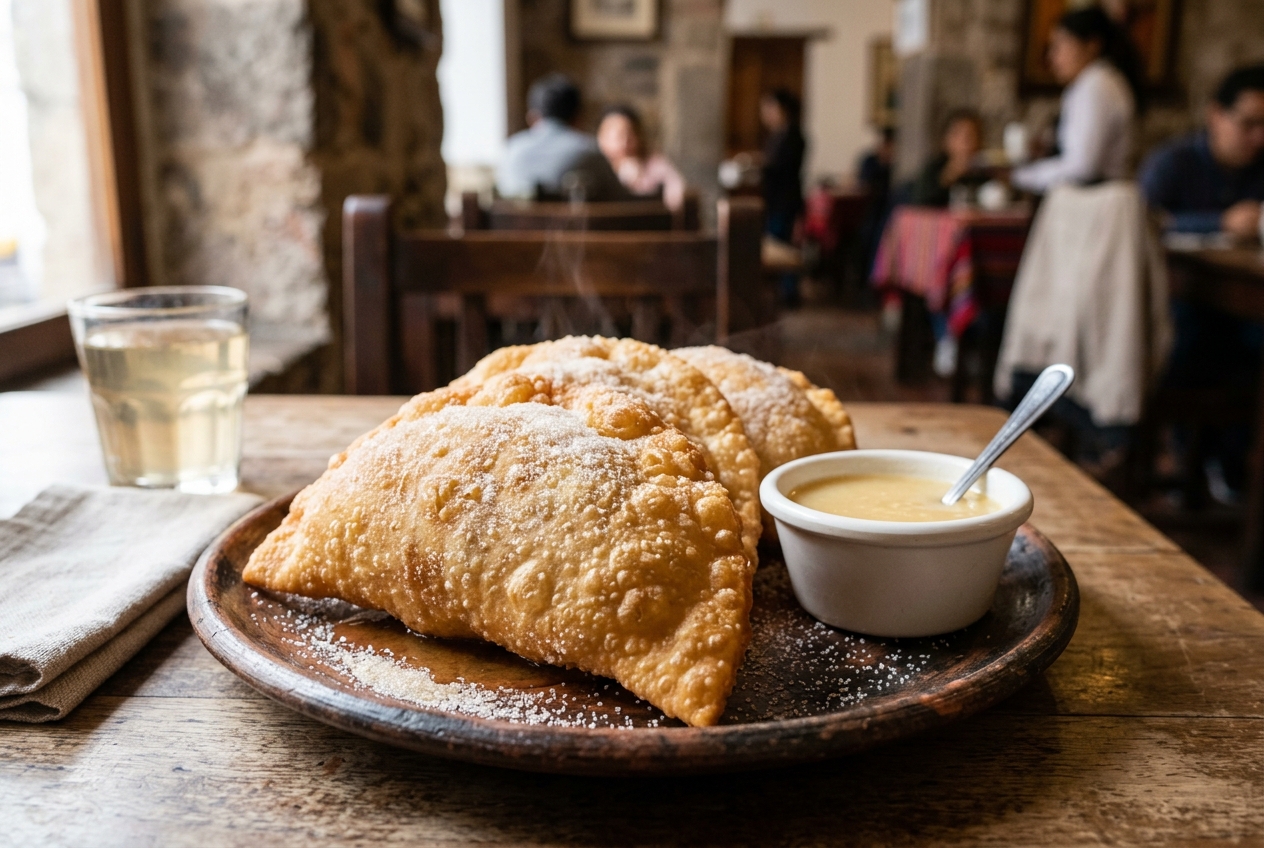
Empanadas de viento
These cheese-filled empanadas, dusted with sugar, are a popular street food snack and a good option if you want something quick between sightseeing stops. They’re sold both in bakeries and by street vendors around the historic center.
Caldo de patas and other soups
Beyond locro, Quito’s soup culture runs deep — caldo de patas, a hearty broth made with cow’s feet, is another traditional option for those willing to try something more adventurous. Soups in general are considered a proper meal here rather than a starter.
Where locals actually eat
Markets tend to offer the most authentic and affordable versions of these dishes, often at a fraction of restaurant prices, though the atmosphere is more casual and English menus are less common.
Where this fits into your trip
Quito Turismo occasionally publishes food-focused guides highlighting local restaurants, and Ecuador’s Ministry of Tourism also covers regional culinary traditions across the country if you’re traveling beyond Quito.