
Getting Around Quito: A Public Transportation Guide
Once you’ve made it into the city from the airport — covered in our airport transportation guide — getting around Quito day to day is its own separate question. If you’re staying close to downtown, our guide on where to stay in Quito explains how location affects how much you’ll rely on transit at all, and our Quito travel guide covers general trip logistics beyond transportation alone.
Quito’s main public transportation options
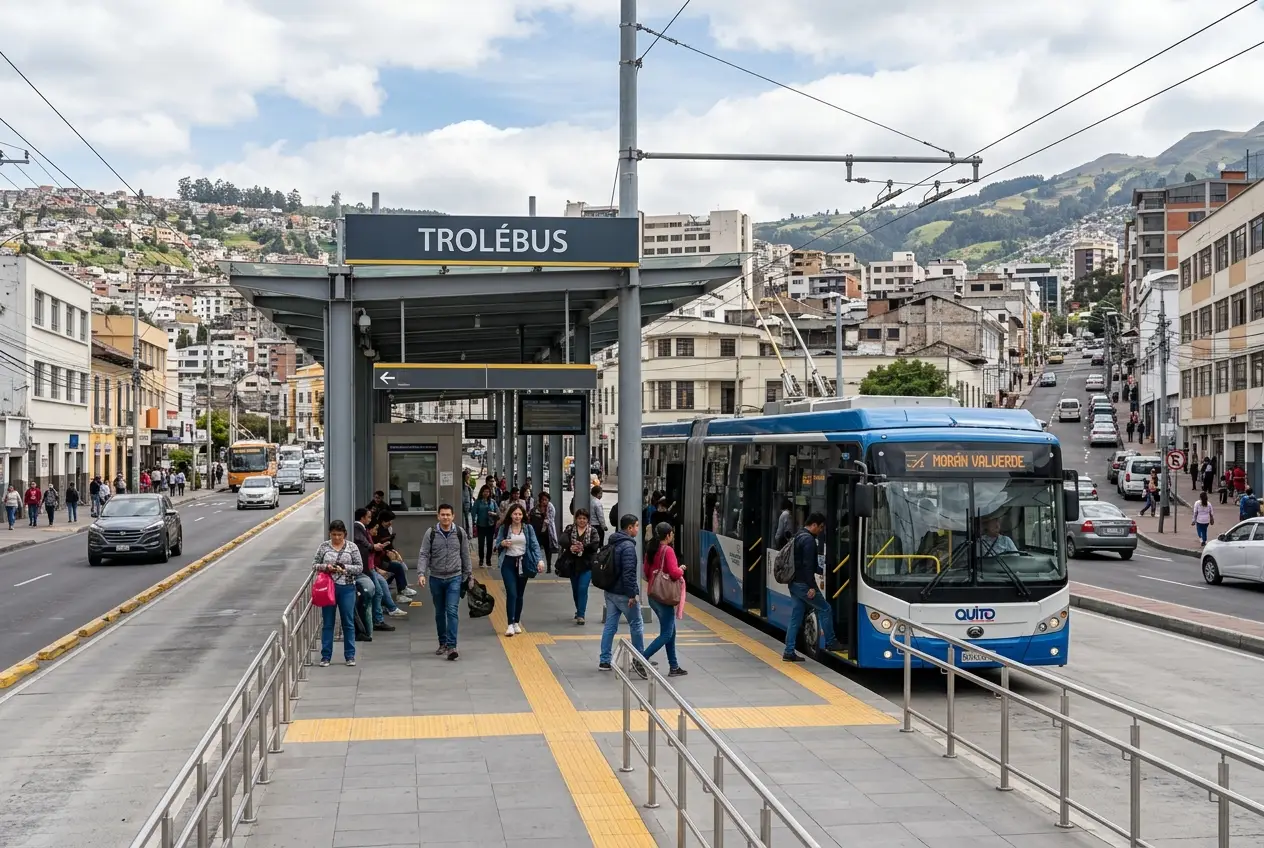
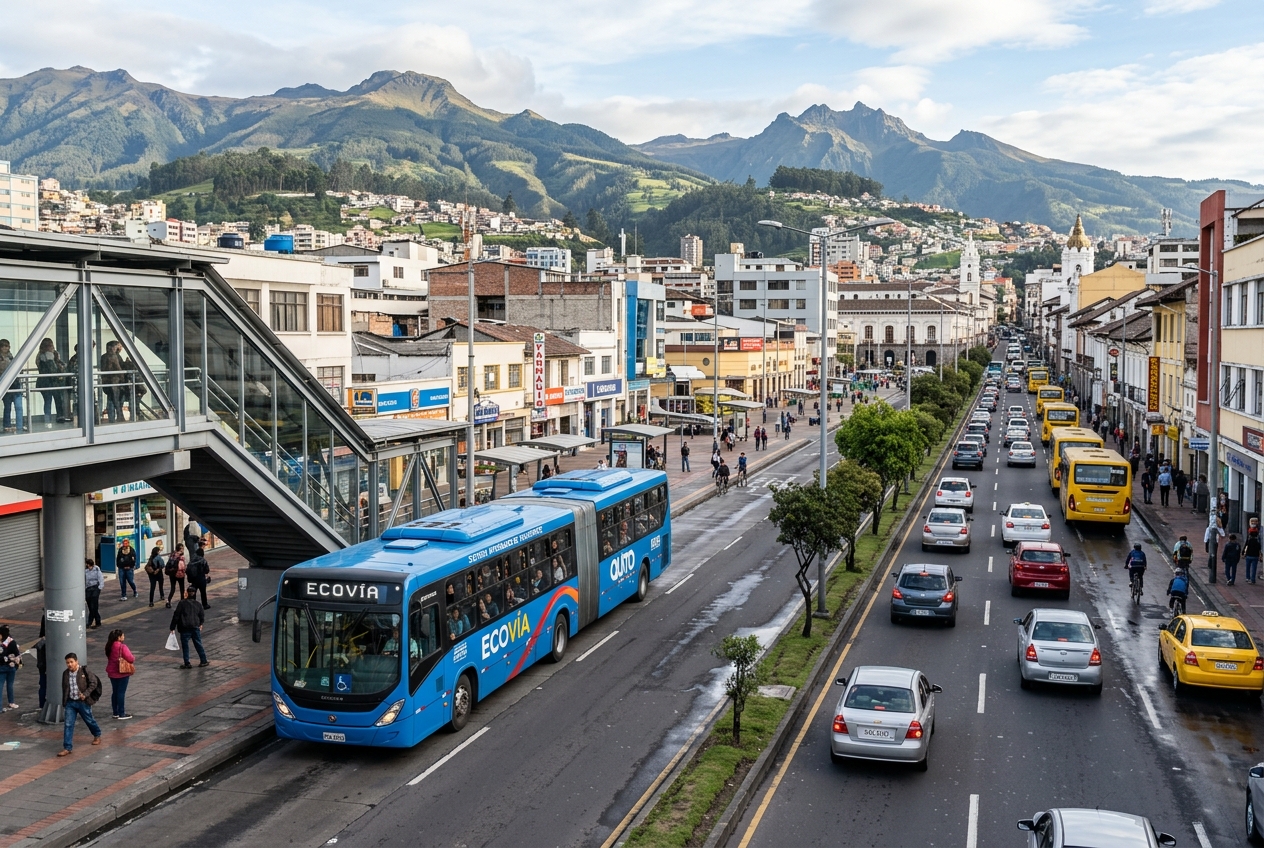
The city runs several dedicated bus corridors, including the Trolebus and Ecovía lines, which use designated lanes to avoid regular traffic congestion. These are the fastest public options for covering longer distances across the city, and they’re worth understanding before you rely on taxis for every trip.
Trolebus and Ecovía
Both systems run north-south through the city on separated lanes, with frequent stops near major landmarks and neighborhoods. Fares are paid at station entrances rather than onboard, and the flat rate applies regardless of distance traveled, which makes budgeting for transit fairly predictable throughout your stay.
Regular city buses
A larger network of standard city buses covers routes the Trolebus and Ecovía don’t reach, though schedules are less predictable and buses can get crowded during peak hours. These tend to work best for shorter, more local trips rather than crossing the entire city.
Taxis and rideshare within the city
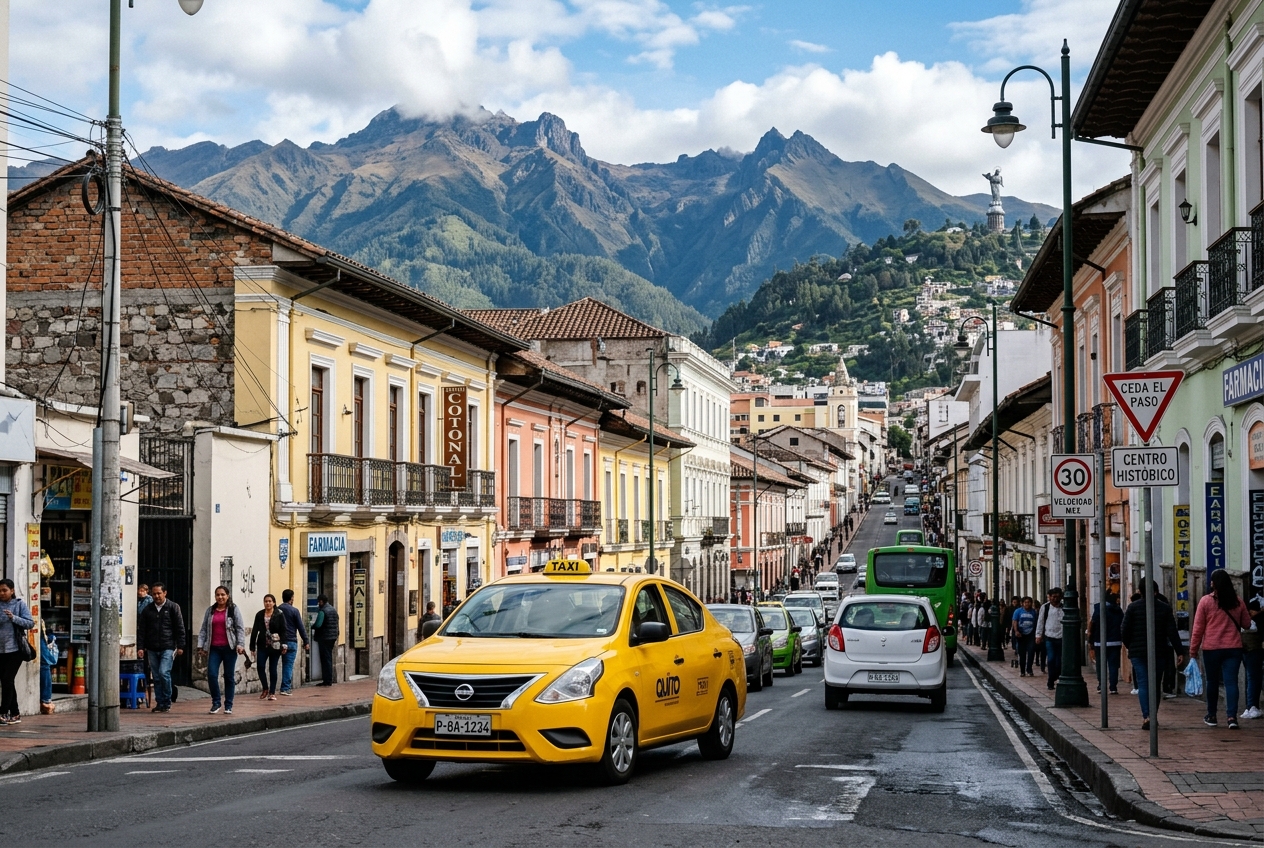
For shorter trips or when carrying luggage, taxis and rideshare apps remain the most convenient option, particularly outside of rush hour when traffic is lighter. Many hotels, including ours, can also help arrange a trusted taxi if you’d rather not hail one on the street.
Walking as a transportation option
Within the historic center and parts of Mariscal Sucre, walking is often the most practical way to get around, since traffic and one-way streets can make short taxi rides slower than expected. Just keep Quito’s altitude in mind if you’re covering long distances uphill.
Peak hours and traffic patterns
Like most capital cities, Quito has predictable rush hours in the morning and early evening, when both public transit and taxis slow down considerably. Building in extra time around these windows, especially for airport trips, is a good habit to get into.
A note on safety and orientation
As with public transit in any major city, it’s worth staying alert to your belongings during busy hours. Quito Turismo publishes updated transit maps and guidance for visitors, and Ecuador’s Ministry of Tourism offers broader travel guidance for getting around the country.